

2. Equipment for the New Year
Linux Distribution

The Linux distribution currently in use is Ubuntu 25.10. The initial installation was 24.10, upgraded in stages through 25.04 to 25.10. Linux has many distinct lineages[distros]Major lineages include the Debian family (Debian, Linux Mint, Kali Linux, Pop!<>OS, Ubuntu, and so on), the Red Hat family (RHEL, Fedora, Rocky Linux, AlmaLinux, and so on), and the Arch family (Arch Linux and others), along with distinctive lineages such as Gentoo, NixOS, and Slackware., and each distribution has its own appeal, so some guiding principle is required when choosing one.
Ubuntu is a distribution designed around the philosophy of "delivering free and open software to everyone"[ubuntu-name]The name Ubuntu derives from a Southern African concept said to express the idea of "I am because we are.", with the aim of providing a practical environment usable by anyone. Consistent with this design philosophy, its GUI environment, package management, and hardware driver support are all maintained at a high standard. The large user base also means that the available information is overwhelmingly rich: troubleshooting resources, official and unofficial documentation, forums, and learning materials are all well developed, which is a significant advantage.
From the viewpoint of software compatibility, Ubuntu is often the de facto baseline environment. A great deal of OSS and research-and-development tooling is described with Ubuntu assumed as the platform, and even indispensable tool sets such as ROS, CUDA, Docker, TensorFlow, and PyTorch typically present Ubuntu-based instructions first. Even among software that advertises support for multiple distributions, instructions for Ubuntu tend to be presented first, which is practically convenient. Ubuntu is not an idealistic experimental environment, nor an environment aimed exclusively at advanced users; it is a pragmatic distribution that seeks to balance stability with practicality.
Continuity of development is also an important criterion. Canonical has continued development of Ubuntu since its first release in 2004, maintaining it as a stable operating system accessible to ordinary users. Such continuity contributes directly to operational peace of mind. Other distributions, by contrast, have repeatedly undergone changes of direction or outright project termination, forcing users to migrate to different lineages. While such instability is understandable given the nature of OSS, from a practical operational perspective it imposes considerable cost. Experiences of this kind have strengthened the author's preference for platforms that can be trusted over the long term.
Incidentally, the first UNIX-like environment the author encountered was OpenBSD. It made a strong impression at the time. Later, at university, the author was assigned a UNIX System V-based NEC EWS4800, in an era when installing software often required modifying source code to resolve dependencies manually. The experience of constructing an environment from low-level components provided a technical foundation, but in present-day use the author has little appetite for repeating such work.
Desktop Environment
The Linux Desktop currently in use is Ubuntu Desktop, chosen because it is the standard configuration provided with Ubuntu. Adopting the standard environment is reasonable from the standpoints of minimizing additional configuration, facilitating troubleshooting, and benefiting from abundant documentation.
Major desktop environments for Linux include KDE Plasma, Xfce, LXQt, Cinnamon, MATE, and Budgie. KDE Plasma, characterized by Windows-like usability and a high degree of customizability, has broad support. Lightweight environments such as Xfce and LXQt, by contrast, consume few resources and can be expected to operate stably even under hardware constraints. In comparison, Ubuntu Desktop is based on GNOME, a design that emphasizes integration and a consistent user experience at the cost of relatively higher resource consumption.
Regarding the choice of distribution and desktop environment, users more familiar with Linux often prefer more advanced or lightweight configurations, and Ubuntu's standard setup is sometimes criticized as overly simple or insufficiently flexible. The author has in fact encountered such dismissive opinions from experienced users, but in the present case operational reasonableness is prioritized over the evaluations of others. For the time being, the aim is to accumulate experience with the Linux Desktop on a standard and stable environment, and to consider migration to another desktop environment only when a clear need emerges. Ubuntu Desktop also supports a wide range of software, so an immediate shortage of functionality or applications is unlikely. If notable limitations do arise in this environment, the cause is more likely to lie in the overall maturity of the Linux Desktop than in the choice of distribution. In other words, the suspicion arises that the Linux Desktop has not yet even reached its inaugural year.
Given the above, the plan is to continue operating on Ubuntu Desktop on top of Ubuntu for the time being, evaluating its fit with practical requirements through actual use, and to consider changes to the distribution or desktop environment as needed based on those results.
Hardware
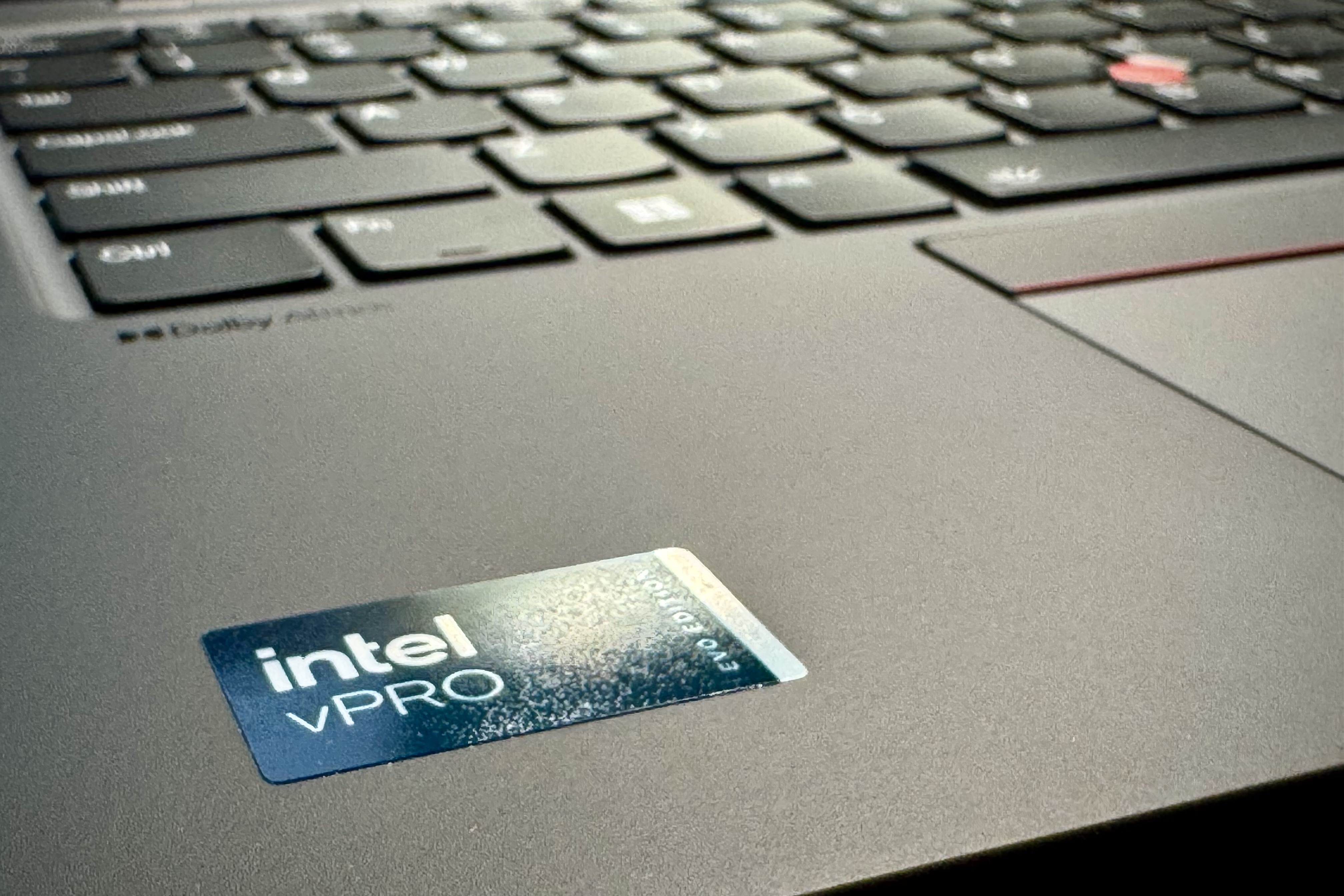
Lenovo ThinkPad X1 Carbon Gen 12. A 14-inch 2.8K OLED, 64 GB RAM, 4 TB SSD configuration weighing approximately 1.08 kg. vPro is supported.
Advisory articles about the Linux Desktop often take the line that it can revive an old, low-performance PC, or that it runs more lightly and comfortably than Windows. This view is not entirely wrong, but realizing a comfortable Linux Desktop in practice does require a correspondingly capable machine. Ostensibly to verify this, the author installed Ubuntu Desktop on a Raspberry Pi 500+, but computing resources proved insufficient; even scrolling in a web browser felt sluggish and uncomfortable. Software support was also inadequate, as Visual Studio Code and GitKraken have no official aarch64 builds. It was difficult to recommend for practical use. It would therefore be unfair to judge the overall comfort of the Linux Desktop based on such low-power, Arm-based devices.
To evaluate the true capabilities of the Linux Desktop, a machine with sufficient performance was procured: the Lenovo ThinkPad X1 Carbon Gen 12. The configuration comprises a Core Ultra 7 165U, 64 GB LPDDR5X-7500, a 4 TB M.2 2280 PCIe-NVMe SSD, a 14-inch 2.8K OLED display, and a US-layout keyboard. The reasons for choosing this machine are its light weight, the ease of swapping storage, the US keyboard layout, and a total cost of roughly 400,000 yen. The fact that it is an officially Ubuntu 22.04-certified machine also weighed heavily, since Linux's backward compatibility made it reasonable to expect it to operate on 24.x or later as well. Furthermore, no Mac in the 14-inch class is as light, and although the 256 GB SSD in the base configuration is effectively of sample quality for the other specifications, it can be easily replaced following the official maintenance manual and many publicly available articles. A 4 TB SSD, which is expensive through Lenovo's own configurator, could be procured for around 50,000 yen through general retail channels. Assuming market prices as of April 2026, however, assembling an equivalent 64 GB RAM and 4 TB SSD configuration from scratch is no longer easy.
Products from Linux-focused manufacturers were also considered. This segment includes System76, TUXEDO, Star Labs, and Slimbook, all of which prepare their machines for Linux Desktop use with support for major distributions. Many are attractive in terms of performance and appearance, and some inspire genuine admiration, such as the Lambda Tensorbook jointly developed by Lambda Labs and RAZER. However, these products are priced in US dollars, and given recent exchange rates they feel rather expensive when viewed from Japan. Among non-specialist manufacturers that explicitly support Linux, HP and Dell exist alongside Lenovo, but at least at the time of consideration they offered only JIS-layout keyboards, and so were not viable given the author's preference for a US layout. For these reasons the author ultimately chose Lenovo's flagship ThinkPad X1 Carbon. As a side note, the ThinkPad X1 Carbon Gen 14 was announced in April 2026 starting at 654,060 yen, and a configuration with 64 GB RAM and 4 TB SSD would reach roughly 930,000 yen. In this price range, selecting an X1 Carbon under equivalent conditions would be difficult today.
Major lineages include the Debian family (Debian, Linux Mint, Kali Linux, Pop!_OS, Ubuntu, and so on), the Red Hat family (RHEL, Fedora, Rocky Linux, AlmaLinux, and so on), and the Arch family (Arch Linux and others), along with distinctive lineages such as Gentoo, NixOS, and Slackware. ↩︎
The name Ubuntu derives from a Southern African concept said to express the idea of "I am because we are." ↩︎